Donor egg IVF – how it may help you fulfil your dreams of parenthood
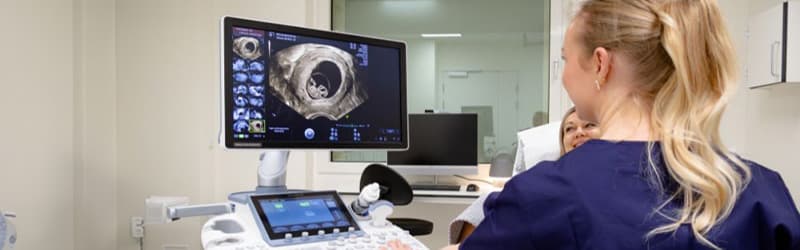
Donor egg IVF is a treatment option for singles and couples who are unable to conceive using their own eggs. Instead, the treatment relies on eggs from a donor. Read about the treatment here.
What is donor egg IVF?
Donor egg IVF is a fertility treatment used by singles and couples who are unable to conceive using their own eggs. During the treatment, you use your partner's sperm to fertilise eggs from a donor, hopefully achieving pregnancy. Donor egg IVF is similar to normal IVF. The only difference is whether the eggs come from yourself or a donor.
Who is it relevant for?
There are various reasons for women to receive IVF treatment with donor eggs. Some of the most common fertility problems that require treatment with donor eggs are:
- Early menopause
- Low-quality eggs
- Lack of response to stimulation in previous fertility treatments
- No healthy ovaries
- Women who received chemotherapy or radiotherapy that has harmed their ovaries

How does donor egg IVF work?
Donor egg IVF is very similar to normal IVF. The only difference is whether the eggs come from the woman who is going to carry the child or an egg donor. Here you can see an overview of the donor egg IVF process with fresh eggs:
Step 1 – Egg donation
The first step in donor egg IVF is for the egg donor to receive fertility hormones that stimulate egg production. Once the eggs are mature, they are retrieved and prepared for fertilisation.
Step 2 – Sperm sample
Fertilisation must occur on the same day as the egg retrieval. Therefore, the sperm sample must be ready once the eggs are retrieved.
Double donation
It is also possible to use sperm from a donor, this is called double donation, as you use both donor sperm and eggs. Double donation is relevant for singles who struggle with infertility and couples who need both donor sperm and eggs to conceive.
Step 3 – Fertilisation of donated eggs
The sperm cells are placed in the same petri dish as the egg. Once the sperm cells find the egg, fertilisation hopefully occurs.
Step 4 – Development of blastocysts
The eggs are then placed in an incubator, where a camera follows their development.
Step 5 – Freezing and storage of blastocysts
Once the eggs reach the blastocyst stage, an embryologist evaluates their development. All high-quality blastocysts are frozen and can be used for future treatments.
Step 6 – Embryo transfer
During the embryo transfer a doctor inserts a thin catheter through the cervical canal and places the embryo in the uterus.
Step 7 – Pregnancy test and potential scan
Approximately 15 days after the treatment, you should take a pregnancy test. If the result of the test is positive, you can schedule an appointment for an early pregnancy scan approximately 3 weeks later (corresponding to weeks 7-8 of your pregnancy).
Relevant articles about IVF

Cost of donor egg IVF
The price of an IVF treatment with donor eggs varies from one clinic to another. At Cryos Clinic, the price of donor egg treatment is EUR 6,760 or GBP 5.800.
The price includes:
- An initial consultation and follow-up consultations if needed
- Egg donation costs (screening, testing, medicine, and egg retrieval)
- Fertilisation by IVF or ICSI method
- Blastocyst culture
- One embryo transfer
- Freezing and storage of excess blastocysts
- Early pregnancy scan
Follow the link to read more about donor egg treatment at Cryos Clinic.
Legal considerations of using donor egg IVF
Treatment with donor gametes is an area surrounded by many different laws depending on the treatment country. In the UK, it is legal to receive treatment with donor eggs. As long as the donation process occurs at a licensed egg bank, the donors have no legal obligations towards children conceived from their donations.
Welcome to Cryos Clinic
We have opened our own Cryos Clinic as we want to help people, no matter their relationship status and sexual orientation, fulfil their dream of a child. Follow the link below to read more about the clinic.
What is the difference between fresh and frozen donor eggs?
In treatment with fresh donor eggs, fertilisation occurs immediately after retrieval. In treatment with frozen donor eggs, the donor eggs are frozen and stored after retrieval, making it possible to fertilise them once the recipient is ready to receive them.
Because the fresh donor eggs are fertilised after retrieval, the recipient and the donor must synchronize their cycles to prepare the recipient's reproductive system for the transfer. But, when using frozen donor eggs there is no need for synchronisation, as the eggs are ready for fertilisation. This makes treatment with frozen donor eggs a much easier and simpler process for both the recipient and the donor than treatment with fresh donor eggs.
Side effects or complications following donor egg IVF
As with all types of treatment involving medicine, there are some common side effects or complications from IVF treatment with donor eggs.
Medical side effects
The most commonly used hormone preparations are Estradiol and Progesterone. Estradiol can cause side effects such as nausea, fluid retention, bloating, and breast tenderness. Progesterone can cause fatigue, nausea, breast tenderness, and headaches.
Preeclampsia
There is a higher risk of preeclampsia and hypertension during pregnancy with donor egg treatments. This condition might require blood pressure medication and could lead to early labour. Daily acetylsalicylic acid is recommended from weeks 12 to 37 of pregnancy to reduce preeclampsia.
Ectopic pregnancy
Despite transferring the fertilised egg to the uterus, ectopic pregnancies can still happen, indicated by severe abdominal pain and/or vaginal bleeding with a positive pregnancy test.
Twin pregnancy
Donor egg treatment increases the likelihood of a twin pregnancy. Typically, only one fertilised egg is transferred to minimise this risk.
Pain, infection, or bleeding after egg transfer
Pain, bleeding, or infection rarely occurs after an egg transfer.