Everything you need to know about sperm count

Sperm count is crucial for male fertility, but what exactly does it mean to have a normal or a low sperm count? By medical standards, a sperm count between 15 million and 200 million sperm cells per millilitre of semen is considered normal. If you have less than 15 million sperm cells per millilitre or less than 39 million sperm cells in total, your sperm count is considered low.
What is sperm count?
Sperm count refers to the number of sperm cells produced per ejaculation. A man’s sperm count is measured in the number of sperm cells per millilitre of sperm. Most men will have millions of sperm cells per millilitre of sperm and below we have gathered the number for each category of sperm count.
| Condition of sperm count | Sperm count | Description |
| Zero sperm count | No sperm cells present in the ejaculation | Almost no chance of natural conception |
| Low sperm count | Less than 15 million sperm cells per millilitre of sperm | Lower chance of natural conception than normal |
| Normal sperm count | Between 15 to 200 million sperm cells per millilitre of sperm | Normal chance of natural conception |
| High sperm count | More than 200 million sperm cells per millilitre of sperm | Generally indicates good fertility, but not necessarily higher chances of conception than normal sperm count |
If you have a complete absence of sperm cells in your ejaculation, it is called azoospermia or zero sperm count. If you have azoospermia, it is almost impossible for you to achieve a pregnancy using your sperm. In this case, you may need to investigate alternatives, like donor sperm.
Understanding good sperm count
In general, a sperm count between 15 to 200 million sperm cells per millilitre is a good sperm count. However, it is important to note that a good sperm count does not always guarantee high conception rates. A factor like sperm motility also plays a crucial role in the ability to conceive.
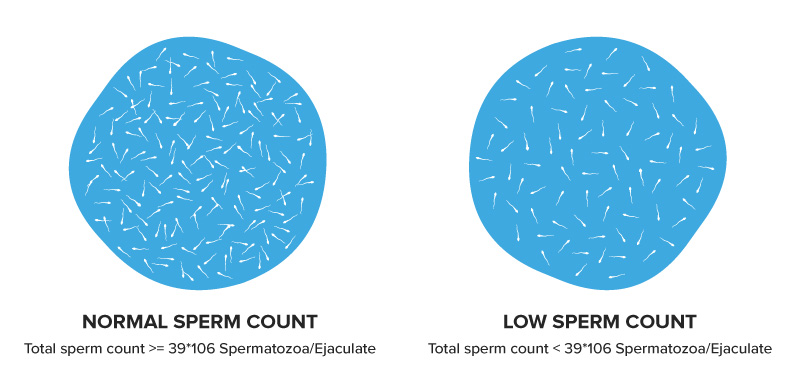
Illustration of the difference between normal and low sperm count
What is the difference between sperm count and sperm quality?
It is important to mention that sperm count is not equivalent to sperm quality. Sperm quality consists of three different factors: Sperm count, sperm motility, and sperm morphology. As an example, your sperm may contain 30 million sperm cells, which is considered normal, but if your sperm motility is below 40% your sperm quality may be considered low.
Semen analysis: Diagnosing sperm quality and count
The only way for you to know whether your sperm count is zero, low, normal, or high is to have your sperm tested. If you are struggling to conceive, a semen analysis could provide helpful insight and might help you figure out how to improve your sperm count. Here is an overview of what to expect at a semen analysis:
- Step 1: Contact the closest Cryos department and schedule an appointment. When making the appointment, our staff will perform an initial screening by phone.
- Step 2: When you arrive for your appointment, you will be asked to fill in documents regarding the sperm analysis. Then our staff will direct you to a room where you can make the sperm sample. It is also possible to do the sample at home.
- Step 3: Once you have made the sperm sample, it will be analysed in our laboratory and you can expect to receive the results by e-mail or telephone.
Follow the link to read more about sperm analysis or read on to learn what affects your sperm count.
Struggling to get pregnant?
If you have had unsuccessful fertility treatment using your own sperm, it may be worth considering other options, like using a sperm donor. Contact us to learn more about the process and how to get started.
Signs of low sperm count and their causes
Often, there are no physical symptoms of low sperm count. It is only visible through semen analysis, where a machine counts the number of sperm cells in an ejaculate. The symptoms are often invisible, as the low sperm count is created by underlying problems, like a hormonal imbalance or an inherited chromosomal abnormality.
In some cases, there are physical symptoms which may be:
- Pain or swelling around the testicle area
- Problems when having sex, either because of a lack of sex drive or difficulty maintaining an erection
- A decreased amount of facial or body hair that stems from a hormone abnormality
What affects your sperm count?
Studies have shown that several factors can affect your sperm count and thus affect your chances of conceiving naturally. Some of the largest factors affecting sperm count are:
- Age: According to this study, the sperm count decreases by approximately 2,1 per cent each year. Other studies confirm a similar pattern. This study found that men in their 40’s and 50’s had 40% fewer spermatids (early stage of a sperm cell) than men in their 20’s and 30’s.
- Health: There is no definitive answer to the question regarding the correlation between health and sperm count, but it is generally accepted that better health leads to higher sperm count.
- Lifestyle: A healthy lifestyle will generally lead to a higher sperm count. This means eating a nutritious diet, exercising regularly, as well as avoiding drug and alcohol use. Follow the link to read more on how to improve your sperm quality through food.
- Medications: Most types of medication do not impact the sperm count negatively. There are a few exceptions, however, such as certain chemotherapy drugs, which can significantly reduce sperm count.
Other articles related to sperm count

Prospects of getting pregnant with normal or low sperm count
For those with a normal sperm count, consistent intercourse around ovulation is important. For those with a low sperm count, various fertility treatments help to increase the chances of conception. Couples often start with IUI and proceed with IVF or ICSI if they do not succeed. In the end, they may need to use a sperm donor to get pregnant.
Getting pregnant with a normal sperm count
Even though your sperm count is normal you can still struggle with conceiving a child. Sometimes it just takes a bit longer, despite everything being normal. The best advice is to keep on trying while tracking your ovulation to ensure that intercourse occurs around the time of ovulation. Follow the link to read more on how to improve your chances of getting pregnant.
Getting pregnant with a low sperm count
If an altered lifestyle is not enough, you and your partner can try fertility treatment. Depending on the number of sperm cells per million, there are different treatments available for men with low sperm counts.
Below we have explained the different types of fertility treatments and how they can help men with low sperm count on their way toward parenthood. If you want to read more on the subject, you can follow the link to our blog post containing tips for getting pregnant with a low sperm count.
IVF treatment: IVF is a bit more complicated than IUI and ICI treatment because the eggs need to be retrieved in order to be fertilized with sperm cells in a lab. After fertilization, they hopefully grow into an embryo, which the doctor will transfer to the woman. If you suffer from low sperm count, you will most likely start with IVF, because the chance of conception increases when the sperm cell is placed alongside the egg in a petri dish. According to the NHS, the live birth rate in 2021 from treatment with IVF was 23% per cycle.
ICSI treatment: ICSI is like IVF treatment, the only difference is that in ICSI the sperm cell is injected straight into the egg. ICSI treatment is a treatment option for men with very low sperm count (or low sperm motility) because the injection of sperm provides the best chances possible for conception. According to the NHS, the live birth rate in 2021 from treatment with ICSI was 23% per cycle.
If neither of the above-mentioned fertility treatments helps you on your way toward parenthood, you might need help from a sperm donor. You can start your journey by reading other men’s stories about fatherhood through sperm donation:
- Toyah and her husband had three children thanks to a sperm donor
- Being a dad to a donor-conceived child: I’m lucky to be a father
- Using a sperm donor to get pregnant – How Verena and Enrico fulfilled their dream of a family
You can also start by researching the available options for sperm donors in our Donor Search. Click the button below to see our Donor Search.