What is intracytoplasmic sperm injection (ICSI treatment) and how does it work?

For single women and lesbian couples, fertility treatment is an option on their journey. But for heterosexual couples experiencing infertility, fertility treatment is an unwanted step towards parenthood. Most heterosexual couples use IVF, but some require even more help. In this blog post, we try to explain what ICSI treatment is, what happens during the treatment - step by step, and when to consider this type of fertility treatment.
What is ICSI treatment?
ICSI (Intracytoplasmic Sperm Injection) is a type of fertility treatment where a single sperm is injected into the egg. ICSI is similar to IVF, as fertilisation occurs outside the body. After fertilization, an egg hopefully develops into a high-quality embryo, before being transferred to the woman’s uterus where pregnancy can occur.
Who is suitable for ICSI?
ICSI is often recommended when male infertility, particularly low sperm motility, makes natural conception difficult. By directly injecting the sperm into the egg, it increases the chances of successful fertilization.
IVF vs ICSI
While both IVF and ICSI involve fertilization outside the body, IVF relies on sperm naturally penetrating the egg. ICSI, on the other hand, directly injects a sperm cell into the egg, making it more suitable for cases of male infertility.
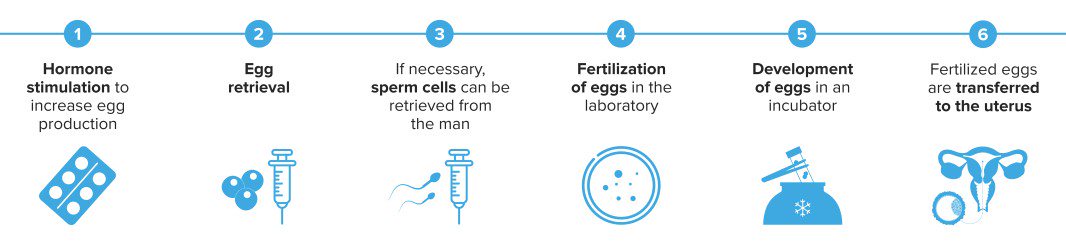
The proces of ICSI treatment
The process of ICSI treatment - step by step
Step 1: Hormone stimulation
Just like IVF treatment, the first step of intracytoplasmic sperm injection is for the woman to take reproductive hormones. The hormones are needed to stimulate the production of eggs in the ovaries. Under normal circumstances, only one egg will mature. But with the help of reproductive hormones, several eggs mature.
Step 2: Egg retrieval
When the eggs have matured, they are removed from the woman’s ovaries with a small needle. The procedure is performed by a fertility doctor while the woman is sedated. The woman is also required to take a trigger shot 36 hours before the procedure to stimulate the lh surge and thereby ensure ovulation which will release the eggs. Because of the sedation, no pain is felt during the egg retrieval, but some women experience discomfort in the area around the uterus in the following days.
Step 3: Sperm retrieval
Just like the eggs are retrieved from the woman, the sperm cells can be retrieved from the man if his ejaculate contains no healthy sperm cells. There are two ways of retrieving the sperm cells, either by surgery or by inserting a narrow tube in the scrotum, where the sperm cells are stored and matured (epididymis).
Step 4: Fertilization of eggs in the laboratory
In the laboratory, the best sperm cells from the male partner or from a sperm donor are selected. After the selection, one single sperm cell is injected into each egg. The procedure is carried out with a fine needle that places the sperm cell inside the egg.
Step 5: Development of eggs in an incubator
After fertilization, the eggs are placed in an incubator. With help from the incubator, the egg and sperm cells hopefully develop into an embryo during a couple of days.
Step 6: Fertilized eggs are transferred to the uterus
When the embryos are successfully developed, an embryologist will transfer one or more embryos from the incubator to the uterus, where a pregnancy hopefully occurs. If more than one embryo develops sufficiently, the excess embryos can be frozen and stored for another attempt or future siblings.
What does ICSI treatment cost?
Intracytoplasmic sperm injection is the most complex type of fertility treatment. The complex procedure is visible in the total cost of ICSI treatment, as one round of ICSI is a bit more expensive than IVF and starts at 5200 GBP per round. Treatment costs usually include consultations with fertility specialists, ultrasound exams, blood tests, medications, and the actual ICSI procedure itself.
Before you start the treatment, we recommend you research whether your insurance makes you eligible for fertility treatment in the public healthcare system, as it often helps reduce the total cost of ICSI treatment. The costs often vary from one fertility clinic to another. If you need any help researching or finding the right fertility clinic, contact our Customer Care Team.
The donor sperm needed for ICSI treatment also comes at a cost, which is affected by the fertility clinics' preferences. If you want to see the current Cryos sperm bank prices, then follow the link.
How much sperm to order for ICSI treatment?
When ordering donor sperm for fertility treatment, you receive the sperm in straws of 0.5 millilitres. For ICSI you need to order 1 x IUI straw MOT2 or higher.
Struggling to get pregnant?
If you have had unsuccessful fertility treatment using your own sperm, it may be worth to consider other options like using a sperm donor. Our dedicated Customer Care Team is ready to assist you.
When is intracytoplasmic sperm injection a good option?
ICSI treatment is recommended if the man has low sperm quality – for example, due to a genetic condition. This type of treatment is designed to help the sperm cells as much as possible because the cells are extracted from the man and injected directly into the egg, which increases the chances of an embryo developing and, in the end, a successful pregnancy. In some cases, intracytoplasmic sperm injection can be recommended as an alternative to IVF treatment, but only in cases where the woman has healthy eggs. If the woman has poor egg quality, ICSI treatment would not be recommended.
The possibility of having twins with intracytoplasmic sperm injection
It is standard procedure to transfer two or more embryos to increase the chances of a successful pregnancy. The transfer of multiple embryos also increases the chances of having twins. The number of embryos transferred will typically be decided between you, your partner (if you have one), and a fertility doctor. It is important to talk about this before going into ICSI treatment, because a twin pregnancy has a higher risk of causing complications than a single baby pregnancy.
Success rates using ICSI treatment
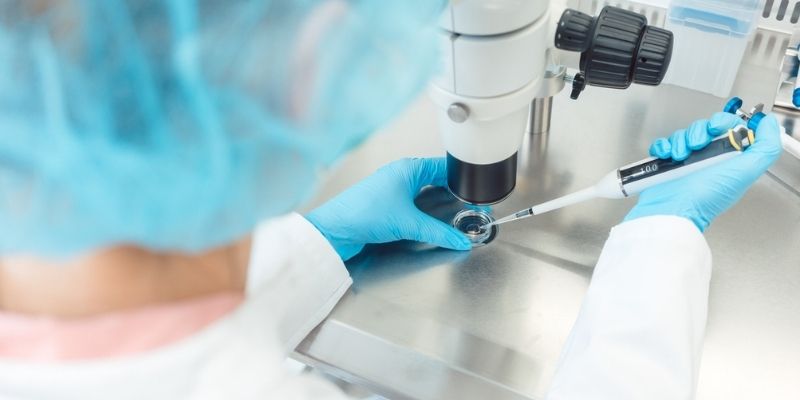
According to the NHS, in 2021 there was a live birth rate of 23% in cycles with ICSI treatment. But it is important to remember that the success above rate is an average of many different procedures involving many different women and men. Your success rate in ICSI treatment depends a lot on your general lifestyle, age when receiving fertility treatment, and whether you or your partner has any genetic diseases regarding fertility.
If you want to read about how to increase your chances of getting pregnant, then follow the link.
How to increase chances in ICSI treatment
Because ICSI treatment is designed to help couples experiencing male infertility, it is important for both the man and woman to have a healthy lifestyle with a balanced diet and exercise. It is also important to avoid supplements that may have a negative effect on your fertility, such as alcohol and smoking. It is also very important for the man to avoid heat sources such as saunas, hot tubs, and solariums since heat has a negative impact on sperm quality.

Moving forward with fertility treatment
Experiencing infertility is normal. In fact, 15% of all couples who are trying to conceive will experience infertility. You are not alone and a lot of couples experiencing infertility find a way to overcome it, either by continuing in fertility treatment or by using donor gametes. During fertility treatment, it is important to focus on your mental health as well. Follow the link to our blog post containing 4 tips to increase your mental health during fertility treatment.
ICSI treatment with donor sperm may be an option if a woman at earlier attempts has had few eggs fertilized or if there are only a few eggs to fertilize and the partner has no healthy sperm cells. If you are looking into the possibility of using ICSI treatment with donor sperm, we can recommend that you look at our free Sperm Donor Search.
Another possibility is to get pregnant using egg donation. If the woman has poor egg quality, we can recommend looking into egg donation as an option. If you want to read more about the possibility of becoming pregnant by using an egg donor, follow the link to learn more on the subject.
Resources for people in fertility treatment
At Cryos, we want to help and inform our customers to provide the best possible journey towards parenthood. Fertility treatment is like a rollercoaster and you will experience a lot of ups and downs. We have tried to help you by creating blog posts relevant to each stage of the process:
Frequently asked questions about ICSI treatment
Is ICSI treatment painful?
The ICSI procedure itself is not painful as it is performed under local anaesthesia or sedation. However, some women may experience mild discomfort or cramping during the egg retrieval process, which involves using a needle to remove eggs from the ovaries. This discomfort is usually temporary and can be managed with pain relief medication.
Is ICSI better than IVF?
In terms of success rates, ICSI is better than IVF. The reason is that the sperm cells are injected directly into the egg, thus increasing the chance of fertilization.